


Data application layer
This layer provides end users with status monitoring, alarm handling, and energy-use analysis through the Touming IoT Platform, client applications, mobile inspection tools, and a workshop operations dashboard.
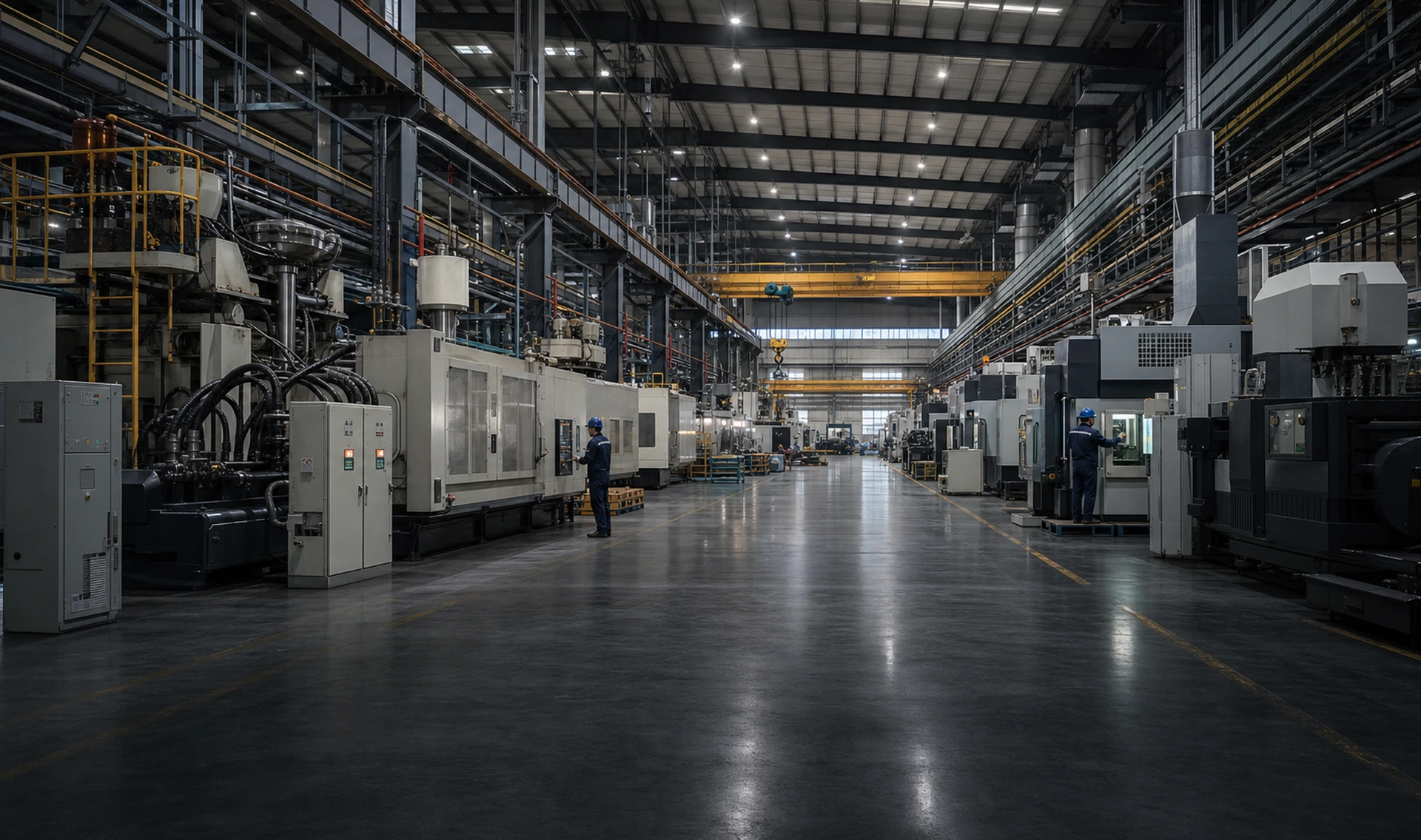
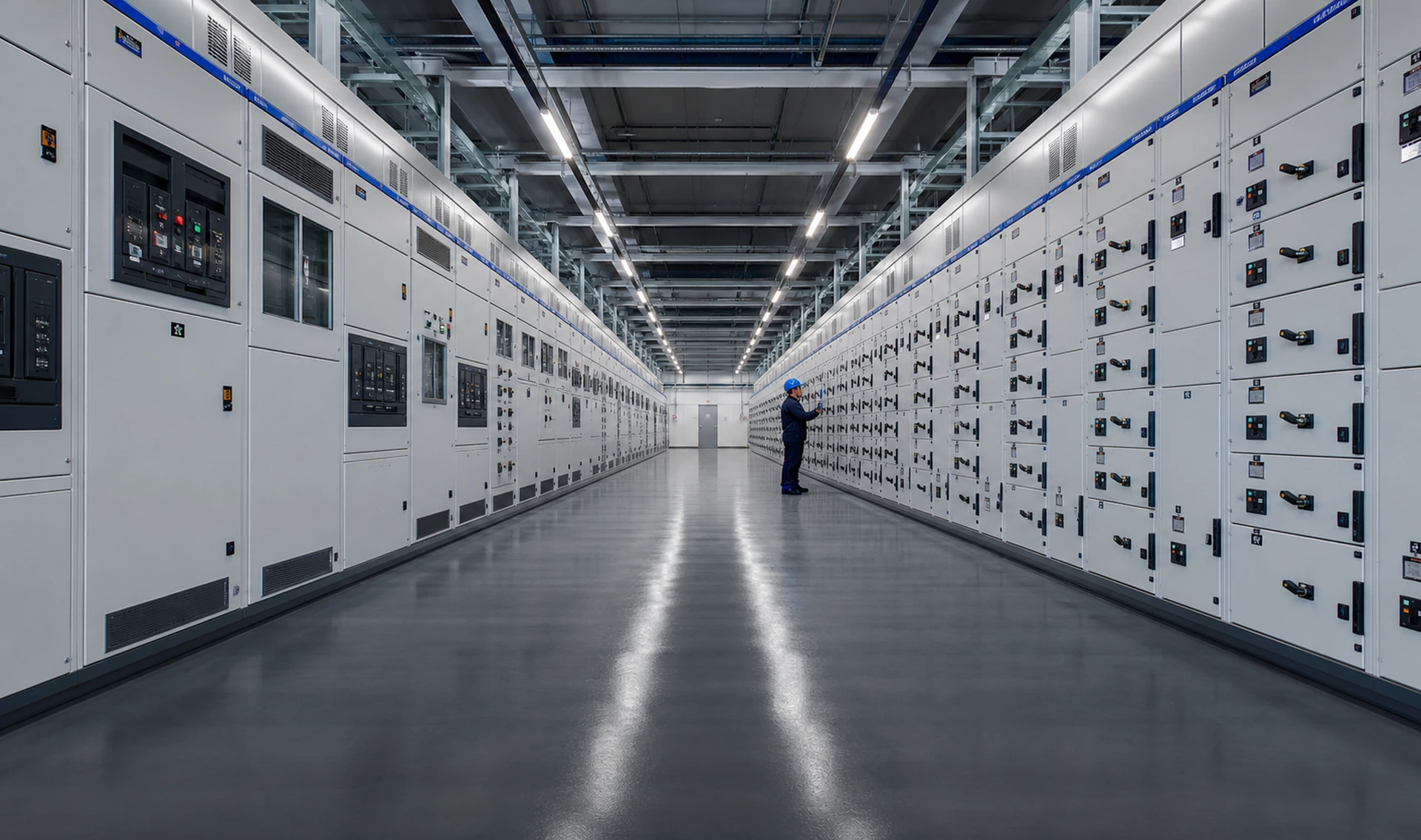
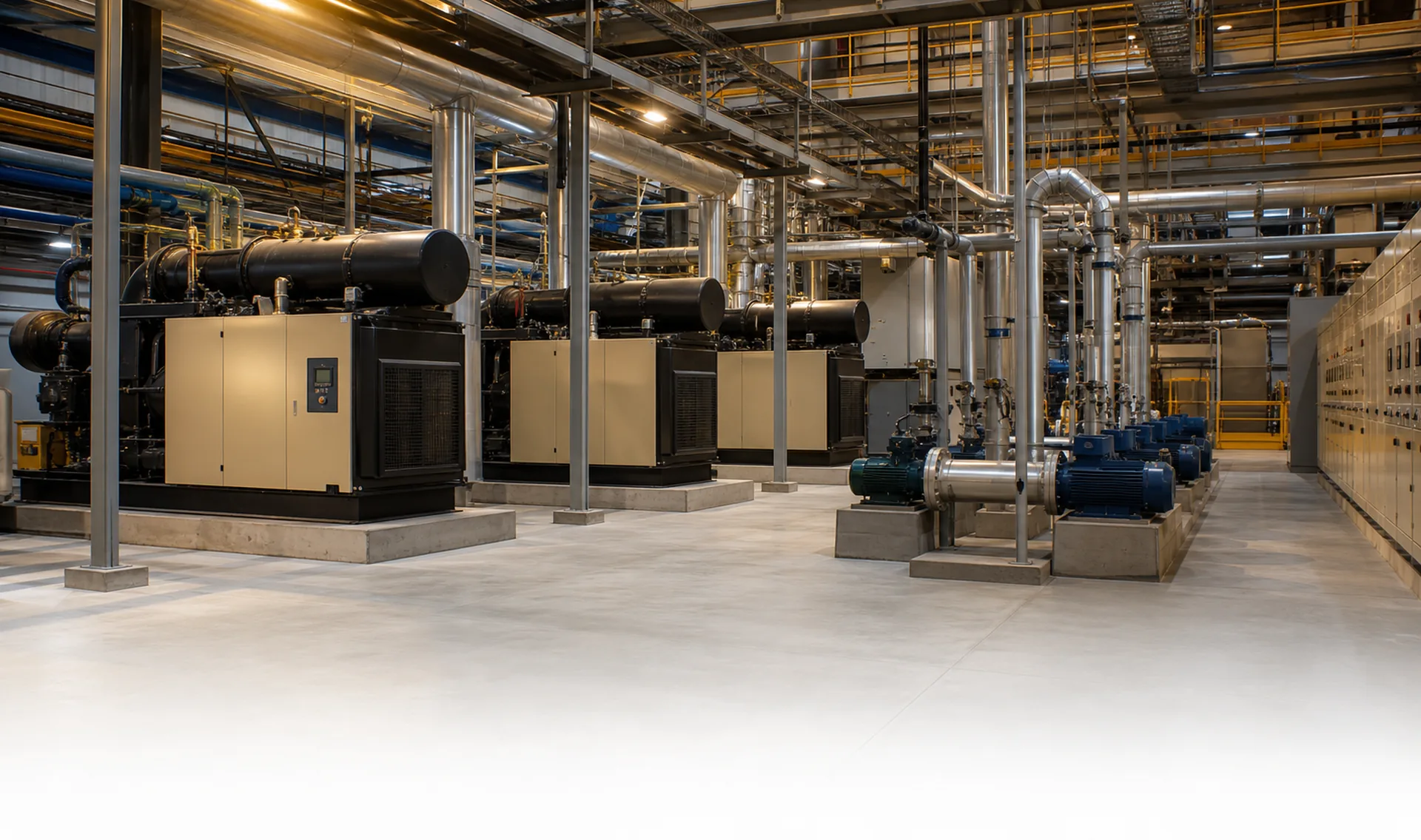
The factory smart power distribution monitoring and management solution is mainly applied to power distribution network monitoring in production workshops, warehouses and office areas. It gathers data from devices such as smart MCCBs, smart circuit breakers, energy meters, residual-current modules, temperature sensors, wireless temperature monitoring and cameras to deliver circuit status, alarms, energy consumption and temperature-rise monitoring, helping users improve the transparency of power distribution management.
This layer provides end users with status monitoring, alarm handling, and energy-use analysis through the Touming IoT Platform, client applications, mobile inspection tools, and a workshop operations dashboard.
This layer provides reliable data transmission and protocol conversion. It comprises network switches, a communication management unit, and 4G/RS485 gateways that connect the main distribution cabinet, workshop distribution boards, and distributed equipment circuits.
This layer comprises field devices such as smart moulded-case circuit breakers in the main distribution cabinet, smart circuit breakers in workshop distribution boards, energy meters, residual-current modules, temperature sensors, wireless temperature-monitoring devices, and cameras. It forms the data foundation of the complete power-distribution monitoring solution.
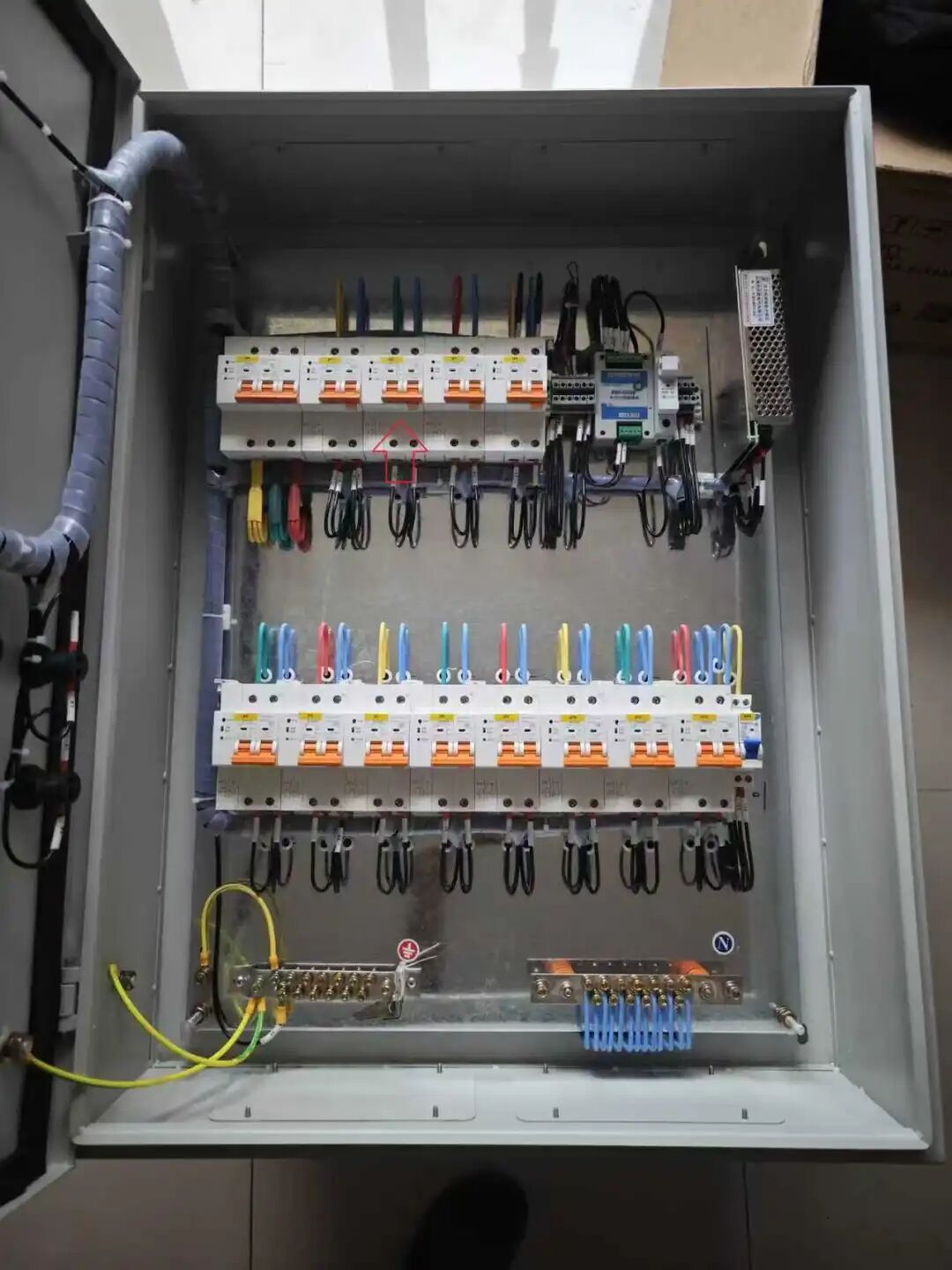
Preserves a record of the site distribution board as modified, making the actual connection boundary easy to judge.

Displays real-time power, device online status, alarm statistics, zone distribution and energy-use trends in one place.
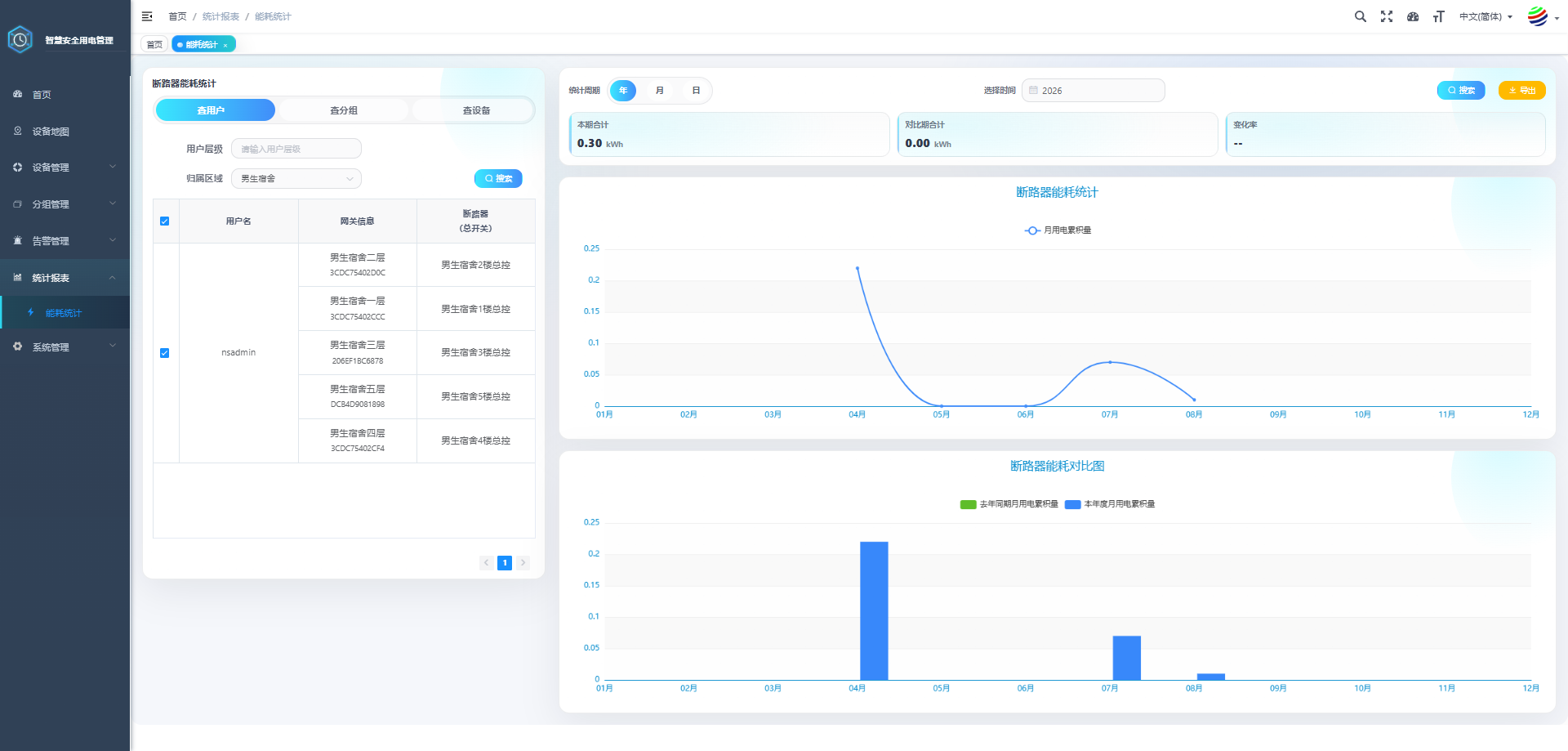
Circuit-breaker energy-consumption trends and same-period comparisons can be viewed by user, group and device.
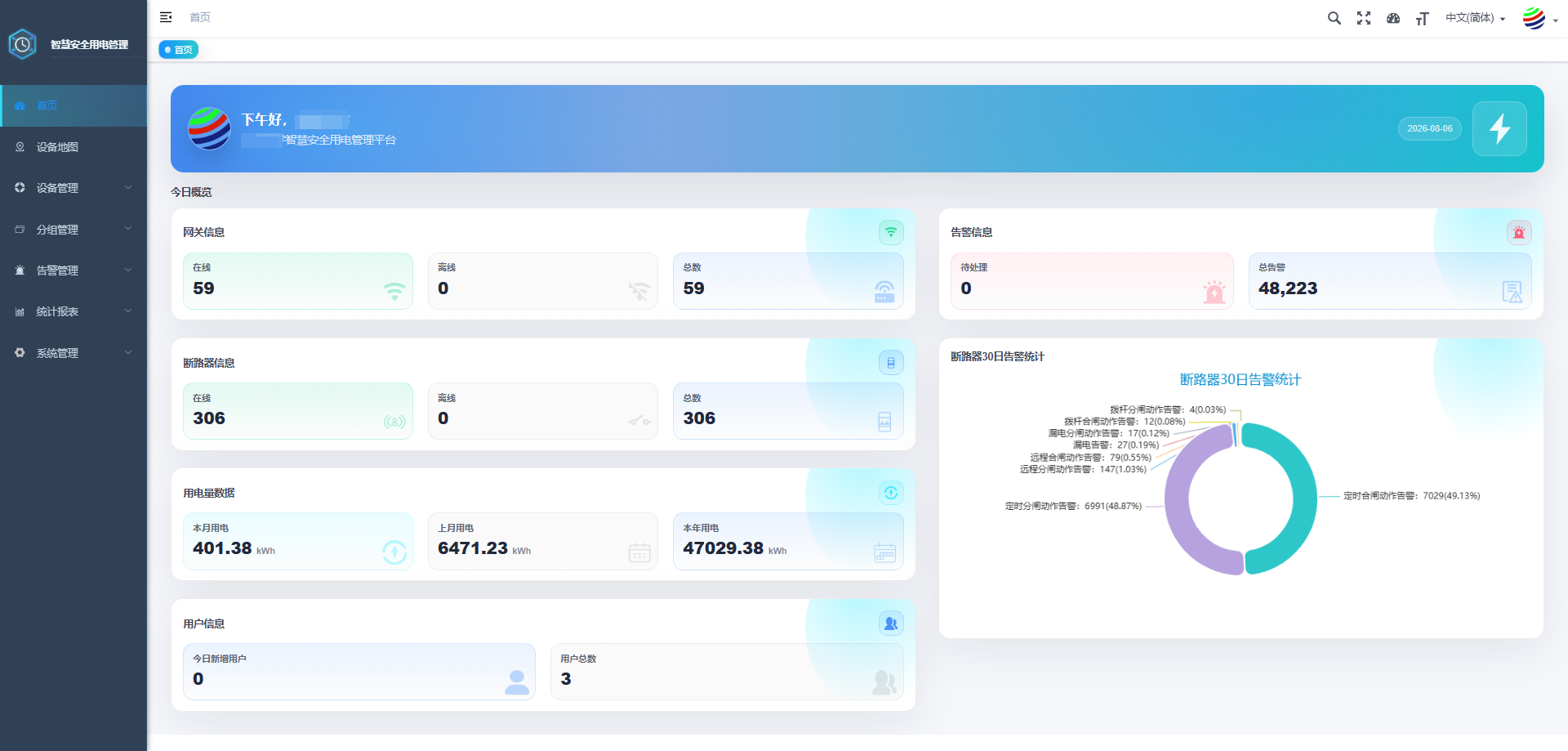
Summarizes gateways, circuit breakers, alarms, energy use and user operating status.
Covers typical factory power spaces such as automated production, high-load processes, main plant distribution, power and utility auxiliary systems, warehouse loading and unloading, and office and amenity facilities.